
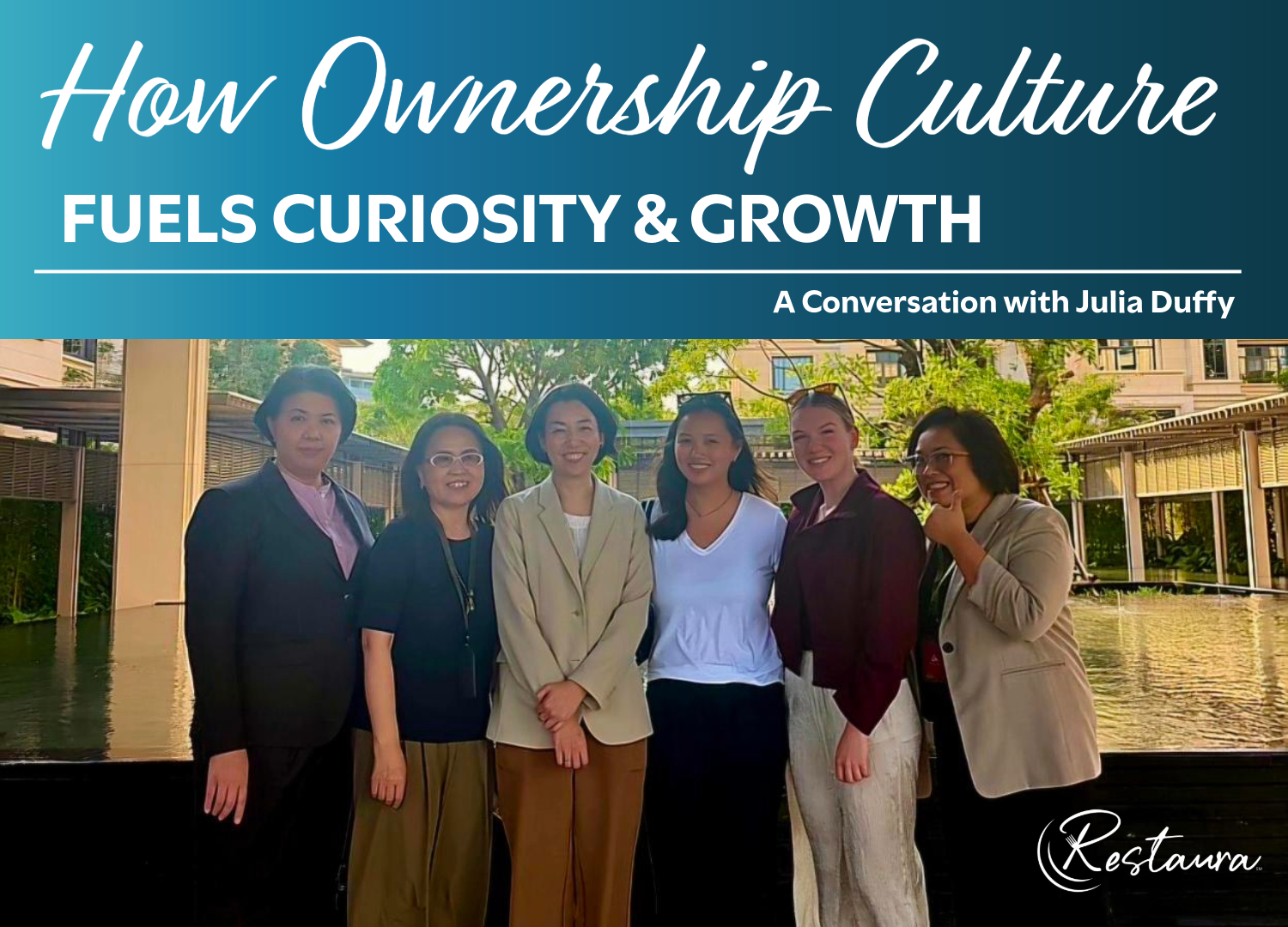
At the Phoenix3 Collective, every team member has an ownership stake in their operating company at no cost, regardless of title, tenure, or role. That structure is foundational to our culture and directly influences how people show up: with a deeper level of caring, stronger accountability, and an innate curiosity about how things can be done better. When individuals are true stakeholders, they look beyond job descriptions, take initiative, and engage with the work as something they genuinely own.
Julia Duffy, a rising star in business development at Restaura, is a clear example of that ownership mentality in action. While on a personal vacation in Thailand, Julia took time to visit a senior living community in Bangkok — not because it was requested or expected, but because understanding how aging and care are approached globally matters to her as an owner.
What follows is a Q&A with Julia on how the visit came together, what she experienced, and what it reinforced about culture, longevity, and the power of ownership 8,600 miles from home.
Q: How did this visit come about?
Julia: Restaura recently partnered with the Association of Jewish Aging Services (AJAS) and when I mentioned my upcoming vacation to Thailand to AJAS President Ruth Katz, she mentioned The Aspen Tree, an innovative senior living community there that is operated by Baycrest, a global leader in aging and brain health. I was intrigued and together we arranged a time for me to meet The Aspen Tree team during my trip.
Q: What was your “why” for visiting a senior living community while on vacation?
Julia: I had heard that in Thailand, aging is traditionally centered around family, respect, and interdependence. Purpose‑built senior communities are still relatively new in Thailand, and I was curious how a global operator would design care that honors local values while offering modern support. Plus, I was excited to see any similarities or differences of a community on the other side of the world, compared to those I have visited in the US.
Q: What stood out to you during your visit?
Julia: The Aspen Tree felt calm, intentional, and deeply engaging. Staff interactions were warm and unhurried, and the entire community was immaculate and wellness centered. A major draw for residents is the on-site brain health center, which reflects a proactive approach to cognitive well-being. The community itself is incredibly well-appointed with movie theaters, a craft room, a massage parlor and spa, a gym, indoor and outdoor pools, and more. I was interested to learn that many U.S. residents who relocate to Thailand come from Hawaii, where the cultural familiarity makes the transition feel more natural.
Q: What did you take away personally and professionally?
Julia: Personally, the visit reinforced that aging is truly a privilege in a place like The Aspen Tree. In Thai culture, elders are valued for their wisdom and experience, with a strong emphasis on belonging and purpose. On a lighter note, I learned that avocados are expensive to source in Thailand, so avocado toast may not be a menu staple at The Aspen!
Professionally, it showed me how effective senior living can be when global expertise is adapted thoughtfully to local culture. As a global operator, Baycrest isn’t exporting a Western model; instead, they’re shaping care at The Aspen Tree around Thai values and expectations. I was especially impressed by the personalized fitness programming, including body composition analysis and custom gym equipment designed to support joint health and individual needs.
Q: Any advice for your peers at Restaura and beyond?
Julia: I think our ownership culture at Phoenix3 really encourages us to think differently and keep our eyes wide open for opportunities to grow the company and ourselves.
My advice is to take initiative. Say yes to opportunities to learn, even when they aren’t obvious or convenient. Exposure to different cultures, care models, and perspectives will challenge assumptions and sharpen how you think about aging, family engagement, and what it truly means to support people well as they grow older.
Also, network intentionally and don’t underestimate where a single conversation can lead….sometimes it’s 8,600 miles away from home!